






Autoimmune Conditions

Overview
Most people living with an autoimmune condition have been told some version of the same thing: this is what you have, here is your prescription, and diet has nothing to do with it.
That leaves an enormous amount on the table.
Autoimmune conditions are driven by inflammation, and inflammation is fed every single day by what you eat. Not by everything you eat, and not by the same things for everyone, which is exactly why generic advice disappoints and why identifying your specific triggers changes the picture so completely.
Revero is an online medical clinic built around that idea. We combine a personalized elimination and low-carbohydrate nutrition therapy with licensed medical providers, regular inflammatory marker testing, daily symptom tracking, and a health coach who is with you every day. Our patients see their symptom scores and their inflammation come down, and many are able to reduce or come off medications over time under their provider’s guidance.
If you have been managing your condition and waiting for something to actually change, this page explains what we do and why it works.
The evidence behind root-cause care
Why food matters so much in autoimmune disease
Crohn’s disease attacks the gut. Rheumatoid arthritis attacks the joints. Psoriasis attacks the skin. Different targets, but underneath them sits the same process: an immune system responding to something it should be ignoring, and refusing to stand down.
Three things drive that process, and two of them you can change.
Your gut barrier is the front line
The lining of your intestine is meant to be selective, absorbing nutrients while keeping bacterial fragments and undigested food proteins out of your bloodstream. When that barrier becomes more permeable than it should be, material your immune system was never meant to encounter starts crossing into circulation, and your immune system responds exactly as designed. It attacks.
Increased intestinal permeability appears across autoimmune conditions, including ones with no obvious connection to digestion. It is documented in rheumatoid arthritis. A large share of people with ankylosing spondylitis have microscopic gut inflammation despite no digestive symptoms at all. The gut keeps turning up at the centre of autoimmune disease no matter where the symptoms land.
Certain foods affect that barrier directly. Gluten triggers release of zonulin, the protein that regulates how tightly the gut lining is sealed. Lectins and saponins in grains and legumes bind to gut cells and disrupt barrier function. Emulsifiers and additives in processed food degrade the protective mucus layer. Remove them, and you take pressure off the barrier that is letting the trigger through in the first place.
Some foods provoke your immune system directly
Beyond the barrier, specific food proteins act as antigens in susceptible people, meaning the immune system treats them as threats. The A1 beta-casein in dairy converts into a peptide that stimulates immune cells. Egg proteins provoke immune responses in some people with autoimmune conditions. Alkaloids in nightshades appear to worsen pain and inflammation in inflammatory joint and skin disease.
These do not affect everyone, and that is the single most important fact on this page. Which ones affect you is a question with a real, findable answer, and finding it is what our program is built to do.
Lowering carbohydrate does something separate and additive
Alongside removing triggers, we lower carbohydrate intake, and this works through an entirely different mechanism.
When your body shifts toward burning fat, it produces ketone bodies, principally beta-hydroxybutyrate. Beta-hydroxybutyrate is not just fuel. It directly inhibits the NLRP3 inflammasome, one of the central switches your immune system uses to generate inflammatory signals. The metabolic state itself has an anti-inflammatory effect, independent of which foods you removed.
This is measurable. A systematic review and meta-analysis of randomized controlled trials found that low-carbohydrate diets significantly lowered TNF-alpha and IL-6, two of the inflammatory messengers that drive autoimmune disease and that modern biologic medications are specifically designed to block.
Lower insulin also means less inflammatory signalling from fat tissue, and fewer blood sugar swings mean less oxidative stress. All of it points the same direction.
Put together
You remove the foods provoking your immune system. You take pressure off the gut barrier that is letting them through. And you shift your metabolism into a state that actively suppresses inflammatory signalling. Then, once things have settled, you add foods back one at a time and find out exactly what your body can handle.
That last part matters. This is not a diet you follow forever. It is a process that ends with you knowing your own triggers, eating a wider range of food than you expected, and holding that information for life.
Our medical team is here to support you in every step

Dr. Shawn Baker, MD
.avif)
Dr. Manju Markandaya, MD
.avif)
Dr. Adrian Blackwell, MD
Crohn’s Disease
What Crohn’s disease is
Crohn’s disease is a form of inflammatory bowel disease in which the immune system attacks the lining of the digestive tract. It can appear anywhere from mouth to anus, most often at the end of the small intestine, and it affects the full thickness of the bowel wall. It typically runs in cycles of flare and quiet.
Crohn’s disease symptoms
- Abdominal pain and cramping, often in the lower right
- Persistent or urgent diarrhea
- Blood in the stool
- Fatigue that rest does not resolve
- Unintended weight loss and reduced appetite
- Fever during flares
- Mouth sores
- Pain or drainage near the anus
- Joint pain, eye inflammation, and skin rashes alongside gut symptoms
What drives Crohn’s disease
- A compromised gut barrier. A more permeable intestinal lining lets bacterial products and food proteins into tissue where they provoke an immune attack on the bowel wall.
- Microbiome imbalance. People with Crohn’s consistently show reduced bacterial diversity and a shift toward inflammatory species.
- Diet. Emulsifiers, additives, and refined carbohydrate degrade the protective mucus layer of the gut and are associated with higher rates of inflammatory bowel disease.
- Smoking. Associated with more severe disease and higher relapse rates, and one of the clearest things within your control.
- Genetic susceptibility. More than 200 genetic variants have been linked to inflammatory bowel disease. They raise your risk. They do not decide your outcome.
How Revero treats Crohn’s disease
In Crohn’s, every meal makes direct physical contact with inflamed tissue. That makes food an unusually powerful lever, and it is why dietary change can produce results here faster than in almost any other autoimmune condition.
Your care team removes the food groups that provoke immune activity and degrade the gut lining, then reduces the fermentable carbohydrates that produce gas, bloating, and pressure on an already irritated bowel. During a flare, your plan is adjusted to give the gut less to work against while it heals. Lowering carbohydrate adds a second layer, shifting your metabolism into a state that suppresses inflammatory signalling directly.
The research here is striking. In a Scripps clinical study of an elimination protocol in inflammatory bowel disease, participants had lived with their disease for an average of 19 years and nearly half were on biologic therapy that was not adequately controlling it. Within six weeks, 73% had their disease activity fall into the inactive range, and they held it through the maintenance phase. A follow-up study found significant improvements in quality of life alongside the clinical changes. A separate randomized trial reducing fermentable carbohydrates found 81% of participants improved compared with 46% on their usual diet.
None of this is something you do alone. Your provider reviews your baseline labs before you start and follows your hs-CRP at three, six, and twelve months, so you can watch inflammation coming down rather than guessing from how you feel on a given day. You track abdominal pain, stool frequency, blood, and fatigue daily on the same validated questionnaire a gastroenterologist would use, which means your progress is measured on something that means something clinically.
Your coach is in touch every day, and in Crohn’s that matters most during a flare, when every meal feels like a gamble and you need someone to tell you what is safe to eat tonight. As your symptoms and markers settle, your provider can begin reducing medications where it is clinically appropriate, gradually and with your agreement.
Among Revero patients with Crohn’s disease, average scores on the IBD-Control-8 questionnaire rose from 10.0 to 16.0 in three months. That questionnaire runs from 0, meaning worst control, to 16, meaning best control, and a score of 13 or above indicates disease that is well controlled. Our patients moved from below that line to well above it.1 In an independent Harvard Medical School affiliated study, 97% of participants with gastrointestinal conditions reported their condition resolved or improved.3
Ulcerative Colitis
What ulcerative colitis is
Ulcerative colitis is the other main form of inflammatory bowel disease. It is confined to the colon and rectum, affects the innermost lining rather than the full bowel wall, and spreads continuously from the rectum upward. The underlying process is an immune attack on the gut lining producing ulceration, bleeding, and inflammation.
Ulcerative colitis symptoms
- Diarrhea, frequently with blood or mucus
- Urgency, and the sensation of needing to go without being able to
- Abdominal pain and cramping, often on the left
- Fatigue and anemia from ongoing blood loss
- Unintended weight loss
- Waking at night to use the bathroom
- Joint pain, eye inflammation, or skin problems alongside gut symptoms
What drives ulcerative colitis
- Gut barrier breakdown. The colon lining becomes permeable, and the immune system responds to what crosses it.
- Microbiome imbalance. Shifts in bacterial populations are consistently found in ulcerative colitis and appear to sustain the inflammatory cycle.
- Diet. Emulsifiers, additives, and refined carbohydrate strip the mucus layer that protects the colon wall.
- Immune dysregulation and genetics. Susceptibility runs in families, and the immune response, once triggered, tends to become self-sustaining.
How Revero treats ulcerative colitis
Ulcerative colitis responds to this approach as well as any condition we treat, and there is a reason for that. When inflammation is confined to the colon and driven by what passes through it, changing what passes through it is a direct intervention rather than an indirect one.
Your plan removes the foods that provoke immune activity and strip the protective mucus layer, then reduces the fermentable carbohydrates driving gas, urgency, and pressure. Lowering carbohydrate raises ketone levels that suppress inflammatory signalling through a separate pathway. During flares your plan is adjusted so the colon has less to contend with while it heals.
The Scripps elimination protocol study included patients with ulcerative colitis, with 73% of participants overall reaching inactive disease within six weeks despite an average of 19 years living with it. A randomized trial reducing fermentable carbohydrates found 81% improved compared with 46% on usual diet.
Your provider follows two things here that matter specifically in ulcerative colitis: hs-CRP to see whether inflammation is falling, and a complete blood count, because ongoing blood loss quietly produces the anemia behind a lot of the fatigue. Both are checked at baseline and at three, six, and twelve months.
Day to day, you track urgency, bleeding, frequency, and pain, and your coach sees it as it happens. Patients tell us the most useful part is having someone to ask on a bad morning instead of waiting three months for an appointment. As your scores improve, your provider can start reducing medication, deliberately and with your consent.
Ulcerative colitis has produced the largest change of any condition we track. Among Revero patients, average scores on the IBD-Control-8 questionnaire rose from 6.7 to 15.3 in three months. That questionnaire runs from 0, meaning worst control, to 16, meaning best control, and a score of 13 or above indicates disease that is well controlled. Our patients started well below that line and finished comfortably above it, scoring 96% of the best result the questionnaire allows.1 In an independent Harvard Medical School affiliated study, 97% of participants with gastrointestinal conditions reported their condition resolved or improved.3


Rob lost 60 pounds and improved his insulin resistance with Revero's support
Rheumatoid Arthritis
What rheumatoid arthritis is
Rheumatoid arthritis is an autoimmune condition in which the immune system attacks the synovium, the lining of the joints. That inflammation gradually erodes cartilage and bone, which is why bringing it down matters beyond how you feel day to day. It usually affects joints symmetrically, begins in the smaller joints, and is systemic, so fatigue is often as disabling as the pain.
Rheumatoid arthritis symptoms
- Joint pain, swelling, and warmth, usually symmetrical
- Morning stiffness lasting longer than 30 to 60 minutes
- Fatigue, sometimes profound
- Low-grade fever and malaise during flares
- Reduced grip strength and difficulty with fine movements
- Firm nodules under the skin near affected joints
- Dry eyes and mouth
What drives rheumatoid arthritis
- The gut-joint axis. Increased intestinal permeability is documented in rheumatoid arthritis, and there is good evidence that immune activation begins at mucosal surfaces well before it reaches the joints. The disease may start in your gut long before you feel it in your hands.
- Inflammatory signalling. TNF-alpha and IL-6 are the messengers driving joint destruction. They are what the major biologic drugs are built to block, and they respond to diet as well.
- Dietary triggers. Specific foods provoke symptoms in many people with rheumatoid arthritis. Which ones vary, which is why identifying yours matters more than following a generic anti-inflammatory list.
- Smoking. The strongest known environmental risk factor, particularly alongside the associated genetic markers.
- Excess weight and metabolic inflammation. Fat tissue produces inflammatory signalling molecules, and higher body weight is associated with greater disease activity and poorer response to medication.
- Genetics, sex, and hormones. Two to three times more common in women, with onset often clustering around hormonal transitions.
How Revero treats rheumatoid arthritis
Rheumatoid arthritis is where the two halves of our approach work together most clearly.
The elimination side targets the gut-joint axis. Remove the food proteins provoking immune activity, take pressure off the intestinal barrier letting them through, and you reduce the upstream signal reaching your joints. The low-carbohydrate side works downstream, raising ketone levels that suppress the inflammatory switch producing the cytokines responsible for joint damage.
That second mechanism has been tested directly. In the MIKARA trial, a double-blind randomized controlled study of 61 rheumatoid arthritis patients on stable medication, the group put into ketosis saw a significant reduction in disease activity over 16 weeks while the control group saw none, alongside improvements in quality of life, morning stiffness, and pain. A 2026 study of an elimination protocol in rheumatoid arthritis found improvements in disease activity, fatigue, sleep, and pain in most participants within eight weeks. And a review of low-carbohydrate approaches in inflammatory arthritis found they lower inflammation and ease joint symptoms.
Your provider tracks hs-CRP alongside a full panel at baseline and every three months, so the question of whether this is working gets an objective answer rather than resting on how your hands felt this morning. You log joint pain, swelling, how many joints are involved, morning stiffness, and fatigue daily, on the same instruments a rheumatologist uses.
Your coach handles something that sounds small and is not: cooking when your hands hurt. Simple preparation, batch cooking on better days, and practical ways to hold the plan through a flare. And as your disease activity and inflammatory markers come down, your provider can begin reducing medication, gradually and in coordination with your rheumatologist.
Among Revero patients with rheumatoid arthritis, disease activity improved 40.5% in three months.1 In an independent Harvard Medical School affiliated study, 96% of participants with musculoskeletal conditions reported their condition resolved or improved.3
Ankylosing Spondylitis
What ankylosing spondylitis is
Ankylosing spondylitis is inflammatory arthritis affecting primarily the spine and the sacroiliac joints where the spine meets the pelvis. Over time, chronic inflammation can lead to new bone formation and, in some people, fusion of vertebrae.
It is distinguishable from ordinary back pain by a characteristic pattern: pain and stiffness worse after rest and better with movement, often waking people in the second half of the night, and typically beginning before the age of 45.
Ankylosing spondylitis symptoms
- Back and buttock pain that improves with activity and worsens with rest
- Morning stiffness lasting more than 30 minutes
- Night pain, particularly in the early hours
- Pain where tendons attach to bone, commonly the heel or chest wall
- Reduced spinal flexibility over time
- Fatigue
- Eye inflammation, with pain, redness, and light sensitivity
- Digestive symptoms, more common in this condition than most people realise
What drives ankylosing spondylitis
- The gut-spine connection. This is the most important and least discussed feature of ankylosing spondylitis. A large proportion of patients have microscopic inflammation in the intestine despite no digestive symptoms at all, and a meaningful subset go on to develop inflammatory bowel disease outright. The link between gut inflammation and spinal inflammation in this condition is well established.
- Microbiome composition. Distinct differences in gut bacterial populations are consistently observed in ankylosing spondylitis compared with healthy controls.
- Inflammatory signalling. The same inflammatory messengers driving other autoimmune conditions drive the enthesitis and spinal inflammation here.
- Excess weight. Higher body weight is associated with greater inflammation, more severe disease, and higher cardiovascular risk in ankylosing spondylitis specifically.
- Genetics. The HLA-B27 gene is present in most people with the condition, though most people who carry it never develop it. Something has to trigger it.
How Revero treats ankylosing spondylitis
If your spine is inflamed and your gut is quietly inflamed too, treating only the spine addresses half the problem.
That is the case for a gut-directed approach in ankylosing spondylitis, and it holds whether or not you have any digestive symptoms at all. Removing the foods that increase intestinal permeability and provoke immune activity reduces the inflammatory load coming out of the gut. Lowering carbohydrate raises ketone levels that suppress inflammatory signalling directly, and reduces the inflammatory contribution of excess weight, which matters more in this condition than in most.
The rationale rests on the well-documented relationship between intestinal inflammation and this disease, and on randomized trial evidence that low-carbohydrate diets significantly lower TNF-alpha and IL-6, the inflammatory messengers that drive it. What matters most to us is what our patients tell us: less morning stiffness, easier movement, and less pain.
Your provider follows hs-CRP and a full panel at baseline and every three months, which matters in a condition where inflammation is doing structural damage over years and you cannot feel it happening. Daily, you track back pain, other joint pain and swelling, and how long morning stiffness lasts, which is one of the most sensitive early signals that the plan is working.
Because movement is genuinely part of treatment in ankylosing spondylitis, your coach works with you on staying consistent with it rather than treating it as separate from the nutrition side. And as your symptoms and markers improve, your provider can begin reducing medication, gradually and with your consent.
In our survey of more than 11,000 people following a low-carb high-protein diet, 91% of those with joint and musculoskeletal conditions reported improvement.2 In an independent Harvard Medical School affiliated study, 96% of participants with musculoskeletal conditions reported their condition resolved or improved.3
Lupus
What lupus is
Systemic lupus erythematosus is an autoimmune condition in which the immune system produces antibodies against the body’s own tissue. Unlike conditions that target one organ, lupus can affect the skin, joints, kidneys, blood, heart, lungs, and nervous system, which is why it varies so much between people and is often difficult to diagnose. It typically runs in flares separated by quieter periods.
Lupus symptoms
- Fatigue, often the most disabling symptom
- Joint pain and swelling, commonly in the hands, wrists, and knees
- A butterfly-shaped rash across the cheeks and nose
- Skin rashes elsewhere, often triggered by sunlight
- Fever without infection
- Hair thinning
- Mouth or nose ulcers
- Chest pain when breathing deeply
- Swelling in the legs or around the eyes
- Fingers changing colour in the cold
What drives lupus
- Systemic inflammation. Lupus is driven by inflammatory signalling throughout the body, and that signalling responds to dietary and metabolic inputs as it does in every other autoimmune condition.
- Gut barrier function and the microbiome. A growing body of research links intestinal permeability and microbiome composition to lupus activity, following the same pattern seen across autoimmune disease.
- Hormones. Far more common in women, particularly during the reproductive years.
- Ultraviolet light. A well-established trigger for both skin and systemic flares, which makes sun protection genuinely part of treatment.
- Infections and environmental exposures. Certain viral infections and exposures can trigger onset or flares.
- Genetic susceptibility. Multiple genes affecting immune regulation are implicated.
How Revero treats lupus
Lupus asks a great deal of the body. The inflammatory burden is systemic, the fatigue is relentless, and most treatment focuses on suppressing the immune response without addressing what keeps provoking it.
Our approach works on that second half. Removing the foods that drive immune activation and increase intestinal permeability reduces the daily inflammatory input your body is contending with. Lowering carbohydrate raises ketone levels that suppress inflammatory signalling through a separate pathway, and reduces the inflammatory contribution of excess weight and insulin resistance. Randomized trial evidence shows low-carbohydrate diets significantly lower TNF-alpha and IL-6, two of the messengers central to lupus activity.
Because lupus can involve the kidneys and other major organs, we work as part of your care team rather than around it. Your Revero provider coordinates with your rheumatologist, monitors your labs including kidney markers, and manages any medication changes carefully and gradually. Patients often tell us the biggest change is energy: getting through a day without the fatigue deciding what they are allowed to do.
Monitoring is more thorough in lupus, and deliberately so. Your provider follows hs-CRP, kidney markers, and a complete blood count at baseline and at every follow-up, because lupus can move quietly and the labs often speak before the symptoms do. You track rash, joint pain, joints involved, and fatigue daily on validated instruments.
Your coach’s focus in lupus tends to be energy: building a plan you can follow on a low day, not just a good one, and helping you hold it through a flare. Medication changes are handled by your provider in coordination with your rheumatologist, carefully and never on a timeline that outruns your labs.
In our survey of more than 11,000 people following a low-carb high-protein diet, 97% of those with autoimmune conditions reported improvement.2 In an independent Harvard Medical School affiliated study, 89% of participants with autoimmune conditions reported their condition resolved or improved.3

Psoriatic Arthritis
What psoriatic arthritis is
Psoriatic arthritis is inflammatory joint disease that develops in some people with psoriasis, though occasionally the joint symptoms arrive first. Roughly one in three people with psoriasis will develop it.
It behaves differently from rheumatoid arthritis. It is often asymmetrical, frequently involves the joints closest to the fingernails, and has two near-diagnostic features: dactylitis, where a whole finger or toe swells into a sausage shape, and enthesitis, inflammation where tendons attach to bone.
Psoriatic arthritis symptoms
- Joint pain and swelling, often asymmetrical
- Swelling of a whole finger or toe rather than one joint
- Heel pain or pain at the back of the ankle
- Morning stiffness
- Nail changes, including pitting, ridging, or separation from the nail bed
- Lower back pain in some people
- Fatigue
- Eye inflammation
- Skin plaques, though these can be minimal or absent
What drives psoriatic arthritis
- Metabolic inflammation. The link between excess weight and psoriatic arthritis is unusually strong, both for developing the condition and for how well treatment works. Fat tissue is metabolically active and produces inflammatory signals feeding directly into joint and skin disease, which makes this condition particularly responsive to a metabolic intervention.
- Insulin resistance. Commonly present alongside psoriatic disease and part of the same inflammatory picture.
- Shared immune pathways. The same inflammatory signalling drives the skin and the joint disease, which is why addressing the underlying inflammation tends to improve both at once.
- Existing psoriasis. The single largest risk factor, with nail involvement and more extensive skin disease increasing likelihood.
- Genetics, trauma, and infections. Family history raises risk, and both physical trauma and infections have been reported as triggers.
How Revero treats psoriatic arthritis
Psoriatic arthritis is one of the most metabolically driven conditions on this page, and that works strongly in your favour, because metabolism is precisely what our nutrition therapy changes.
Removing the foods that provoke immune activity addresses the skin and the joints at the same time, since both are driven by the same inflammatory pathways. Lowering carbohydrate does something more: it reduces insulin resistance and excess weight, which in this condition are not side issues but active contributors to disease activity, and it raises ketone levels that suppress inflammatory signalling directly.
This has been tested. In a study of a low-carbohydrate approach in psoriatic arthritis, participants saw significant reductions in pain, in joint and skin disease activity, and in the impact of the condition on their ability to work, all by week nine, alongside improvements in insulin and lipid levels. A review of low-carbohydrate approaches in inflammatory arthritis found they lower inflammation and ease joint symptoms across this group of conditions.
Your lab panel here is broader than joint inflammation alone. Your provider follows hs-CRP together with fasting insulin and lipids, because in psoriatic arthritis the metabolic picture is not a side issue, it is part of the disease. Watching insulin fall alongside your joint scores tells you the mechanism is working.
You track joints, morning stiffness, and skin daily, so you can see both halves of the condition moving. Your coach supports the nutrition plan and the weight change that usually comes with it, which in this condition improves your response to treatment as well. As your scores improve, your provider can begin reducing medication, gradually and with your consent.
In our survey of more than 11,000 people following a low-carb high-protein diet, 91% of those with joint and musculoskeletal conditions and 96% of those with skin conditions reported improvement.2 In an independent Harvard Medical School affiliated study, 96% of participants with musculoskeletal conditions reported their condition resolved or improved.3
Psoriasis
What psoriasis is
Psoriasis is an immune-driven condition in which the immune system signals skin cells to reproduce far faster than normal. Cells that should take about a month to reach the surface arrive in a few days, piling up into the raised, scaly plaques that characterise the disease.
It is not cosmetic and it is not contagious. It is a systemic inflammatory condition that happens to show on the skin, which is why it travels with joint disease, cardiovascular risk, and metabolic conditions.
Psoriasis symptoms
- Raised, red or discoloured patches covered with silvery scale
- Commonly on elbows, knees, scalp, and lower back, though it can appear anywhere
- Itching, burning, or soreness
- Dry, cracked skin that may bleed
- Nail pitting, thickening, or separation from the nail bed
- Flares that come and go, often following stress or illness
- Joint pain or stiffness, which may indicate psoriatic arthritis
What drives psoriasis
- Metabolic health. Psoriasis is strongly associated with obesity, insulin resistance, and metabolic syndrome, and the relationship runs in both directions. Improving metabolic health frequently improves the skin, which makes this one of the most addressable autoimmune conditions there is.
- Inflammatory signalling. Specific inflammatory pathways drive the accelerated skin cell turnover. These are what modern biologic medications target, and they also respond to diet.
- Gluten sensitivity in a subset of patients. A meaningful minority of people with psoriasis have antibodies to gliadin, and those people respond to gluten removal dramatically. Finding out whether you are one of them is straightforward and worth doing.
- Alcohol and smoking. Both associated with more severe disease and poorer treatment response.
- Stress and infections. Streptococcal infection in particular can trigger onset or a flare.
- Genetics. Family history is common, and onset usually follows a trigger in someone already susceptible.
How Revero treats psoriasis
There is a study in psoriasis that makes the case for our entire approach better than we could.
Researchers put psoriasis patients on a gluten-free diet for three months. Those who tested positive for antibodies to gliadin saw meaningful improvement in psoriasis severity, and 60% got worse again when gluten was reintroduced. Those without the antibodies saw no benefit at all.
Read as an average, that study says diet does not do much for psoriasis. Read properly, it says diet does an enormous amount for some people and nothing for others, and that everything depends on identifying which you are. That is exactly what a structured elimination and reintroduction process is for, and it is why we do not hand anyone a generic anti-inflammatory food list.
Alongside that, lowering carbohydrate targets the metabolic side of psoriasis, which is unusually influential in this condition. Reducing insulin resistance and excess weight removes a genuine driver of skin inflammation, and randomized trial evidence shows low-carbohydrate diets significantly lower TNF-alpha and IL-6, two of the inflammatory messengers driving plaque formation.
Your provider follows hs-CRP, fasting insulin, and lipids at baseline and every three months, because in psoriasis the metabolic markers frequently move before the skin does. That matters practically: it gives you evidence the plan is working during the weeks when your mirror has not caught up yet.
You track plaques, itching, and cracking daily, which builds a clear picture of what your skin responds to. Skin is slower than gut or joints, and your coach’s main job early on is keeping you with it through that lag, plus running your reintroductions carefully so a single trigger food does not get missed. As your skin and markers improve, your provider can begin reducing medication, gradually and with your consent.
In our survey of more than 11,000 people following a low-carb high-protein diet, 96% of those with skin conditions reported improvement.2 In an independent Harvard Medical School affiliated study, 92% of participants with skin conditions reported their condition resolved or improved.3
How your plan actually works
The first phase is about finding answers
We begin by removing the most common immune triggers together. Not because you will avoid all of them forever, but because while you are eating all of them the signal is buried in noise, and nobody, including you, can tell what is actually causing your symptoms.
No blood test answers this reliably. Food sensitivity panels are widely sold and are not dependable for identifying immune triggers. Structured elimination followed by careful reintroduction remains the most accurate method available, and it is what your care team runs with you.
Then you get your foods back
Once your symptoms and inflammatory markers have improved, your care team starts adding foods back one at a time while you keep tracking daily. No reaction, and the food stays. Symptoms return, and you have learned something specific and permanent about your own body.
Most people finish this process eating considerably more variety than they expected, and knowing exactly which few things they need to avoid.
The plan moves with you
Progressing well, and your care team widens it. Want to push harder, and they can tighten it. Struggling to stay with it, and you tell your coach and it changes. A plan you abandon in week three helps nobody, so we build one you can actually keep.
Medications
You do not stop anything to start with us. You begin your nutrition therapy while continuing everything you currently take, and nothing changes unless your provider recommends it and you agree.
As your symptoms and inflammatory markers improve, reducing medication becomes a real possibility. Revero uses a structured, stepwise process for autoimmune medications, run by your provider, monitored with lab work and daily symptom tracking, and coordinated with your specialist. This is also exactly why this is worth doing with a medical team rather than alone: these medications need careful, supervised tapering, and having a provider watching your labs is what makes reducing them safe.
Many of our patients get there. It happens gradually, with data, and with a physician making the call.
Success stories


Rob lost 60 pounds and improved his insulin resistance with Revero's support

Caroline Resolved Her Endometriosis
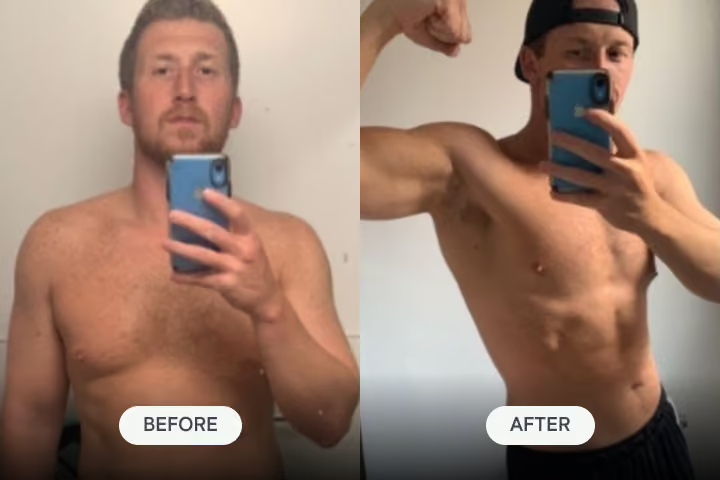
Corey's Journey Allowed Him To Overcome a Weight Loss Plateau
Results
Across all conditions, Revero patients saw hs-CRP, a standard marker of systemic inflammation, improve 25% in three months. Patients who entered with the lowest quality-of-life scores saw substantial gains across nearly every domain measured, including energy and fatigue, pain, physical functioning, and emotional wellbeing. The people carrying the heaviest burden at the start improved the most.1
In our survey of more than 11,000 people following a low-carb high-protein diet, 97% of those with autoimmune conditions reported improvement, along with 95% of those with gastrointestinal conditions, 96% with skin conditions, and 91% with joint and musculoskeletal conditions. 79% of those taking medications reported reducing or eliminating them.2
In an independent Harvard Medical School affiliated study, 89% of participants with autoimmune conditions reported their condition resolved or improved, along with 97% with gastrointestinal conditions, 96% with musculoskeletal conditions, and 92% with skin conditions. 95% reported their overall health improved.3
Revero is here to support you in every step
- A personalized low-carb nutrition therapy plan tailored to your conditions, biomarkers, and goals
- Medical care from clinicians available in all 50 states
- Step-by-step medication adjustments guided by your care team
- Regular lab work and daily biomarker tracking through the Revero app
- 1-on-1 daily support from a dedicated health coach
- Weekly community meetings led by Dr. Shawn Baker, MD
Frequently asked questions
Do I have to stop my biologic or immunosuppressant to start?
No. You begin your nutrition therapy while continuing everything you currently take, and nothing changes unless your provider recommends it and you agree.
Reducing medication is something many of our patients work toward and many achieve. It happens gradually, guided by your lab work and daily symptom tracking, with your provider making every decision alongside you. Having a medical team watching your inflammatory markers is what makes that possible safely, and it is one of the main reasons to do this with a clinic rather than on your own.
Will this work alongside my rheumatologist or gastroenterologist?
Yes, and that is how it is designed to work. Your specialist provides oversight and treatments we do not, and Revero adds what is usually missing from that care: a structured, medically supervised nutrition therapy, daily symptom tracking, regular inflammatory marker testing, and someone in contact with you every day rather than every few months.
We coordinate with your specialist rather than working around them, and most are supportive once they see the lab work.
How will I know which foods are actually causing my symptoms?
Through structured elimination and reintroduction, tracked daily. This is worth being clear about, because food sensitivity blood panels are heavily marketed and are not reliable for identifying immune triggers.
What does work is removing the likely triggers together until symptoms settle, then adding them back one at a time while you log symptoms daily and your coach watches the pattern with you. It takes longer than a blood test, and it gives you an answer you can actually trust. By the end you know your own triggers specifically, which is information that stays useful for the rest of your life.
1 Enhancing Metabolic and Autoimmune Health: Revero’s Innovative Approach (Observational program data using labs and patient questionnaires. Not randomized, not a clinical trial. Outcomes vary.)
2 Low-Carbohydrate Carnivore Diet: Impact On Health (Self-reported 2019 survey of people following the diet 3+ months. Survey results, not a clinical trial. Not Revero patients.)
3 Harvard Medical School affiliated Study (Behavioral Characteristics and Self-Reported Health Status among 2029 Adults Consuming a “Carnivore Diet”) (Independent research. Not conducted or funded by Revero. Not Revero patients.)
Additional research referenced on this page is linked inline.
On this page
Start making real progress
