






Artificial Sweeteners: Problems, What Is Permitted, and Alternatives
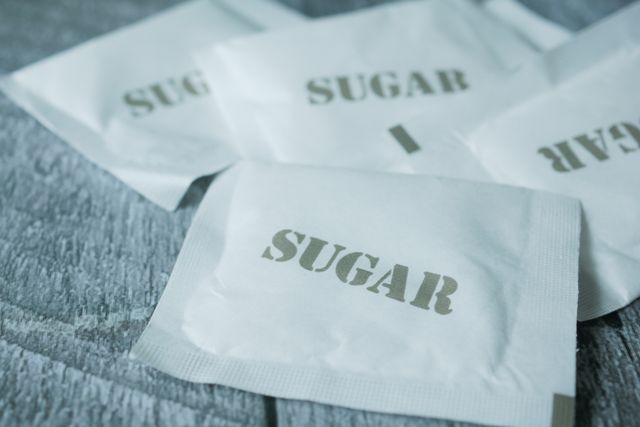
Pitch the pastel packets!
Artificial sweeteners seem so innocent. As sweet as they appear on the outside, artificial sweeteners are hiding a truth that’s as bitter as bile.
Derailing Your Diet
Depending on the time of year and location, our early hunter-gatherer ancestors might have stumbled across some wild berries or a beehive. They would probably try some berries or brave the bees and steal some honey. The moment they chomped those berries or that drop of honey hit their tongue, fireworks went off in their brains. Their energy was renewed, and they could go on longer searching for dinner.
Why? Sweetness signals to our bodies that it’s a source of quick energy, and this is how artificial sweeteners derail your efforts by boosting your insulin level. While artificial sweeteners taste sweet, they have little to no calories. The body’s primed to get that fast energy boost, but it’s got nothing. And because your body wants the energy you promised, you’re driven to eat more.
Using artificial sweeteners increases your appetite, and you consume more calories. If you were eating a standard Western diet, that usually means carbohydrates. While you might have “saved” 120 calories by getting a diet soda, you probably ate way more than that in extra food.
Messing With Your Metabolism
When artificial sweeteners trick our brain into thinking it’s getting “food” when it isn’t, for many of us, our bodies respond by producing insulin. Yes, even though they don’t contain sugar, artificial sweeteners can trigger our pancreas to release insulin in preparation for the “sugar” the body thinks it’s about to get.
Why is this a problem? When our insulin levels are chronically high, our cells become less receptive to it, and our bodies have to produce more and more to try and bring our blood sugar down. After a while, this leads to hyperinsulinemia, insulin resistance, and type 2 diabetes. If we’re already diabetic, those artificial sweeteners may not be helping us at all to keep our blood sugar down.
Hazardous to Your Health?
We don’t know the long-term health impacts of artificial sweeteners. There’s anecdotal evidence to suggest they can trigger migraines for some people. Other studies have suggested links between artificial sweeteners and cancer. If using artificial sweeteners is working against our efforts to lose weight, then we’re at risk for obesity-related cancers. Will one diet soda kill us? No, but we simply don’t know what a safe amount is, and the threshold can vary from person to person.
Safe Alternatives to Artificial Sweeteners
If the thought of drinking your coffee black has you feeling blue or if the idea of never sipping a diet soda makes you sad, take heart because there are natural, non-caloric, and very low-calorie alternatives.
- Stevia: can be found in bulk, in individual-size packets, and in some natural diet sodas
- Monk fruit: can be found in bulk and in many natural food products
- Allulose: can be found in bulk (does contain some calories, but has 90% fewer calories than sugar)
These natural sweeteners and products containing them can be found in most grocery stores, so you don’t need to go to a special health food shop to find them. Typically, they can be found in the baking aisle.
Sucralose
While sucralose is an artificial sweetener, it is still allowed on the Revero low-carbohydrate diet. That doesn’t mean that you should drink large quantities of soda with sucralose, though, and many products include combinations of artificial sweeteners. Sucralose might be useful for sweetening some products if you don’t like or can’t obtain safer alternatives.
Xylitol and Erythritol
These are both sugar-free sweeteners, tasting similar to real sugar but with almost no calories. As polyols are the P in FODMAP, many people with a tendency to SIBO or IBS will not tolerate these sweeteners as well as others.
Consider this in your choice; if you find that these cause you gastrointestinal distress, you should choose a different sweetener or not use one at all.
They’re both approved for use on the Revero low-carbohydrate diet but may be eliminated on a personalized diet to test whether they’re factors in symptoms and biomarkers.
Start making real progress

Related

Using a Confidence Mindset to Navigate the Social Scene
Prediabetes Explained