




Check the Pulse of Your Health Status
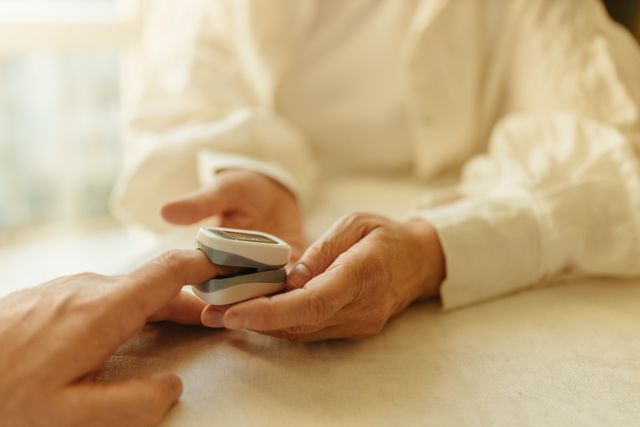
How to use your heart rate to gauge and improve your fitness and health
Your heart is the one organ you may associate the most with health or life itself. We check for a pulse to see if someone is still alive and perform CPR to help them survive if their heart has stopped. The single easiest measurement you can do that provides clues about your health is probably your heart rate. Read on to learn how to use a simple way to evaluate your progress!
Ka-Thump Goes the Pump
Your heart works 24/7, your whole life, to provide blood flow to your vital organs, muscles, brain, and any other living tissue. Every cell we have requires blood flow. That red liquid brings oxygen and nutrients to the cells and picks up waste metabolites like carbon dioxide to remove them. In the lungs, your blood releases carbon dioxide and picks up more oxygen to continue the process.
Factors That Increase the Heart’s Work
A long list of changes can make your heart work harder, as reflected in your heart rate. Here’s a partial list:
- Less airflow in and out of the lungs
- Constricted or clogged arteries
- Increased body fat
- Muscles contracting and burning fuel
- Brain thinking, stress, and burning fuel
- Anemia, as the blood carries less oxygen and carbon dioxide
- Fever or infections
- Hypertension
- Dehydration
- Mineral imbalances, particularly sodium or potassium
- Stress
- Overtraining, insufficient recovery
Whenever these conditions exist, your heart has to pump a little harder. Multiple problems can exist at once, so it’s easy to imagine that your heart rate cumulatively reflects your health.
How to Check Your Heart Rate
Your heart rate is measured in beats per minute. The simplest way to check it is to find your radial or carotid pulse, count the pulses in 15 seconds, and multiply by 4.
Smartwatches and sports watches all have a heart rate monitor function, which is the most common method among people who have adopted these technologies. There are also smartphone apps that use your phone’s camera and flash to detect heartbeats on your fingertip. For use during exercise, a smartwatch, sports watch, or similar device is the easiest.
Cyclists can use heart rate monitor straps, such as the ones made by Wahoo or Polar, and see a continuous heart rate display on their bicycle computer head unit. This is helpful when trying to train in a specific heart rate zone.
Most smartwatches also have alarms that can be set for the low and high ends of a heart rate zone, providing auditory cues that tell you to speed up or slow down.
Resting Heart Rate
The best time to check your resting heart rate is, of course, just after resting, so measure it first thing in the morning, before coffee, and even before getting out of bed. Whenever you do it, try to be consistent. It may not look the same after your morning triple espresso and dog walk!
A normal heart rate is between 60-100 beats per minute, though the upper end of this range probably signals health issues. Athletes routinely have lower heart rates, down into the 40-50 range.
When you know your usual resting heart rate, elevations may indicate something isn’t right. It might be dehydration after that last long, hot trail run, or you might not sleep well. An increased resting heart rate may also indicate infection or general exhaustion. In any case, try to determine the cause and keep it in mind when you plan how intense your day’s exercise will be.
Exercise Capacity
Your heart rate has a maximum, usually predicted at 220 minus your age. There is also an anaerobic threshold when exercising, over which your heart can’t provide enough oxygen for your muscles, and you go anaerobic. Lactic acid, suffering, and reduced intensity ensue!
Your anaerobic threshold will rise as your cardiovascular system strengthens and you get fitter. The amount of exercise you’re capable of is defined by your resting heart rate and aerobic threshold, so as you get fitter, this gap gets bigger. In other words, your resting heart rate decreases while your anaerobic threshold increases.
How to Lower Your Resting Heart Rate
Your resting heart rate will probably get lower as your Revero program helps you improve your health. Also, as you become fitter, your resting heart rate will decrease. Performing aerobic exercise, with occasional sprints, anaerobic efforts, and good recovery can help this happen.
Don’t Obsess; Just Keep Track, and You’ll See Improvements
Getting too caught up in tracking heart rate is easy, so please don’t make it an additional stressor. Just learn to use it as a simple tool that gives you an idea of how things are doing, and you’ll see how it can help you progress. This simple measurement can help you better understand what your body’s most important organ is doing to help you succeed!
Start making real progress

Related
How Digestion, Gut Health, and Autoimmunity Are Tied Together

The Truth About Saturated Fats, LDL, HDL, Cholesterol, and Heart Disease