






Artificial Sweeteners and Sugar Alcohols
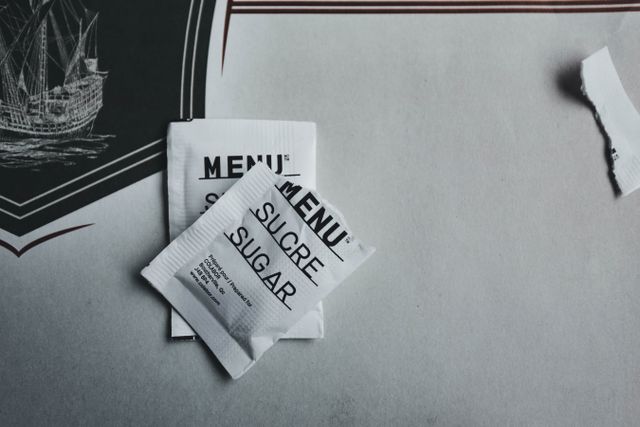
Artificial sweeteners and sugar alcohols
Artificial sweeteners can be useful, but should they be trusted?
People who have type 2 diabetes, need to manage their weight or are health conscious are often advised to use alternatives to sugar. Advocates of artificial sweeteners assert that using the substitutes is a way to enjoy a sweet taste without the negative side effects of sugar, such as insulin spikes and excessive calories.
Artificial sweeteners are much sweeter than table sugar. To keep them from being too sweet, they are often “cut” with bulking agents, such as maltodextrin (a type of starch) and inulin (a type of fiber), to replicate the sweetness level of table sugar. The table below lists FDA-approved artificial sweeteners for general use and as flavor enhancers.
Artificial sweeteners contain calories, despite a large push by food manufacturing companies in their advertising of the products. Due to their intense sweetness and the presence of bulking agents, a minimal amount is required to sweeten products.
Because of this, these substances meet the FDA’s Recommended Amount Customarily Consumed (RACC) guidelines of containing less than 5 calories per RACC and per labeled serving.
While the FDA has approved these artificial sweeteners for the general public by granting them “Generally Recognized as Safe” (GRAS) status, the verdict as to whether these substances are safe is not settled.
Artificial sweeteners and potential health impacts
Few substances undergo as “rigorous” testing as artificial sweeteners. This has led manufacturers of artificial sweeteners and their proponents to proclaim that there is a lack of evidence that artificial sweeteners are harmful to humans. However, multiple studies suggest otherwise.
Artificial sweeteners and glucose metabolism
People suffering from type 2 diabetes, insulin resistance, or hyperinsulinemia are told to avoid sugar-filled beverages and foods and replace them with artificial sweeteners. The recommendations are based on the belief that artificial sweeteners don’t impact insulin levels.
However, some studies suggest this isn’t the case. There is evidence that, because of the intense sweetness, the body still registers artificial sweeteners as sugar, thereby releasing insulin into the bloodstream and worsening insulin resistance.
Compared to people who didn’t use artificial sweeteners, those who did exhibited reduced insulin sensitivity. This isn’t a good sign, because decreases in insulin sensitivity lead to insulin resistance and the development of type 2 diabetes.
Artificial sweeteners and obesity
To manage weight, healthcare providers nearly unanimously instruct their patients to restrict calories. They do this by turning to artificially sweetened foods and drinks to control their calories. In actuality, this thinking backfires, as some studies show that using artificial sweeteners increases appetite, causing the person to eat more and gain weight.
This makes intuitive sense because it is so easy to overeat sweet foods. Consuming artificial sweeteners could trigger the same reward centers in the brain which makes indulging in sweets a challenging habit to quit.
Artificial Sweeteners and cancer
Artificial sweeteners like saccharin, discovered in 1879, were linked to bladder cancer in rats, and by 1977, the federal government had instituted a required warning label on all products containing the sweetener. It was subsequently lifted in 2000. Cyclamate was used from its inception in 1932 until 1970 when it was banned due to a possible cancer link.
A 2022 report published in PLOS Medicine discusses the results of a large cohort study conducted between 2009 and 2021 showing an increased risk for cancer in products containing aspartame and acesulfame-K. The study consisted of 102,865 adults whose intake of artificial sweeteners was tracked.
Researchers found that those who consumed it showed a higher risk for cancer. Breast cancer was expressly associated with aspartame use, while all artificial sweeteners showed a link to breast and obesity-related cancers. Researchers advised that more studies needed to be conducted.
Sugar Alcohols: Xylitol and erythritol
There are many sugar alcohols, but only xylitol and erythritol are permitted on Revero diets.
Sugar alcohols are types of carbohydrates and are used as sugar replacements. Xylitol used to be made from birch trees; today, it can still be processed from hardwoods but is often made from corn. Plants contain xylose, and it is from this that xylitol is made.
The human digestive system cannot metabolize xylose, and therefore it can cause digestive issues. Some people report that if they consume less than 50 grams of xylitol per day, they can avoid digestive problems.
Xylitol is sweet but doesn’t cause cavities. It’s used in gums, toothpastes, and to sweeten sugar-free sodas and candies. Xylitol has fewer calories per teaspoon than sugar, although it can still affect blood sugar levels.
Erythritol is a plant sugar, and the product used in commercial foods is made from corn using fermentation. It is found in many sugar-free store bought foods, such as drinks. candies, and desserts. Erythritol is often mixed with artificial sweeteners, so reading labels is a valuable skill.
Erythritol has no calories, which may make it better for diabetics as it will not affect blood sugar levels as xylitol may. Eaten in large quantities, it can also cause digestive disturbances, and like xylitol, the body cannot digest erythritol. Recently, it has been linked to cardiovascular events.
Sucralose, Xylitol, and Erythritol on the Low-Carbohydrate Diet
The following sweeteners are permitted on a Revero low-carb diet, but may be eliminated in your personalized diet:
- Sucralose
- Xylitol
- Erythritol
- Stevia
- Monk Fruit
- Allulose (virtually calorie-free)
Because xylitol and erythritol may cause digestive issues, they may not be appropriate for all individuals on Revero, but your personalized diet will account for this. In addition, sucralose has been shown to imbalance gut bacteria, causing increased insulin levels. Those with metabolic disease or gut symptoms may be advised against using it.
Choose Wisely
Artificial sweeteners are very popular, due to their sweetness and lack of calories. They may cause problems for some people, so it is wise to minimize their use.
Start making real progress

Related

Cravings Before Your Menstrual Cycle
Guide to Diabetes Self-Care and Medical Care