






Cravings Before Your Menstrual Cycle

About Cravings Before Your Menstrual Cycle
Understanding changes in the body and how to deal with cravings and weight gain before your period
Your menstrual cycle influences your calorie consumption, your metabolic rate, and your macronutrient preferences. Understanding how can help you manage your diet and nutrition, reduce guilt about what you eat before your period, and align food intake with your body's changing needs throughout the menstrual cycle.
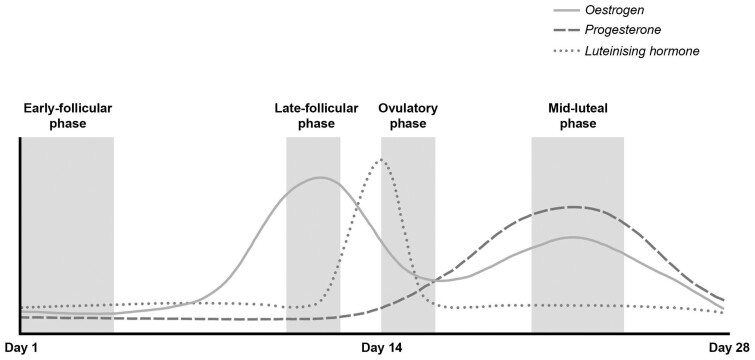
(image from https://pmc.ncbi.nlm.nih.gov/articles/PMC10251302/ )
Phases of Your Menstrual Cycle
Follicular phase (days 1-14) Generally stable or slightly lower caloric intake
- Early follicular phase (Days 1-7):
The early follicular phase spans days 1 to 7 of the menstrual cycle. Hormonal levels, particularly estrogen, begin to rise gradually. The basal metabolic rate (BMR) is at its lowest during this phase, so your caloric intake may remain stable or slightly lower as your body isn’t burning as much energy.
- Late follicular phase (Days 8-14):
The late follicular phase occurs from days 8 to 14 of the menstrual cycle. Estrogen levels continue to rise, reaching their peak just before ovulation. This hormonal surge can influence appetite, which may remain suppressed or at a normal level during this phase. You might prefer lighter foods and experience fewer cravings for high-calorie options during this phase.
Ovulation (Around Day 14):
Around day 14 of the menstrual cycle, ovulation occurs, and you may experience a brief, slight increase in appetite driven by hormonal fluctuations from the release of an egg.
Luteal phase (Days 15-28)
- Early luteal phase (Days 15-21):
The early luteal phase spans days 15 to 21 of the menstrual cycle. Progesterone levels and BMR begin to rise, causing increased appetite and calorie consumption.
- Late luteal phase (Days 22-28):
In the late luteal phase, (days 22 to 28 of the menstrual cycle), BMR and caloric intake increase further, with some women consuming up to 300 additional calories per day compared to the follicular phase.
PMS, Hunger and Cravings
Your appetite and cravings for sweet and high-fat foods may peak as your body prepares for the potential energy demands ahead. It’s okay to increase your daily carbs up to 50 grams during your premenstrual period to allow your body to complete this phase of your cycle.
Premenstrual syndrome (PMS) symptoms, such as heightened hunger and intensified cravings, may also drive the consumption of more calories.
Don’t feel like you have fallen off the wagon or are cheating on your diet. It is perfectly normal to have slightly higher carbs during this time, and you can go back to your normal diet after your period since the cravings will significantly subside.
Why women have different caloric needs during different phases in their cycle
- Basal metabolic rate (BMR):
Body temperature during the luteal phase rises by about 0.27°C, leading to a 6.9% increase in energy expenditure during sleep.
- Appetite:
Energy intake can increase by as much as 300 or more calories per day in the luteal phase, likely due to the appetite-boosting effects of progesterone. Other hormonal factors like estrogen are also major factors.
- Nutrient & macronutrient preferences:
Estrogen promotes fat oxidation for fuel, but ghrelin (the “appetite hormone”) promotes carbohydrate use for fuel after eating. When estrogen drops during the luteal phase, your body might crave carbohydrates. This effect is more pronounced in women with premenstrual syndrome.
- Hormonal, mineral, and glucose needs:
Progesterone rises and the uterine lining thickens during the luteal phase, requiring glucose and magnesium. Magnesium deficiency also causes insulin resistance and unstable blood sugar, further contributing to carbohydrate cravings as the body attempts to stabilize endometrial glucose levels to support a potential pregnancy.
Healthy Snack Options To Manage Cravings:
Since it is acceptable to slightly increase carbs for specific days up to 50 grams of carbs per day, your snack options also expand. Here are some ideas:
- Dark chocolate (70-85% Cocoa)
- Serving: 1 ounce (about 1-2 squares, depending on the brand)
- Net Carbs: ~7g (after subtracting fiber)
- Raspberries with whipped cream
- Serving: 1/2 cup raspberries with 2 tablespoons of unsweetened whipped cream
- Net Carbs: ~4g (raspberries are high in fiber)
- Blueberries with Greek yogurt
- Serving: 1/4 cup blueberries with 1/4 cup full-fat Greek yogurt
- Net Carbs: ~7g (Greek yogurt has some carbs, but also protein)
- Strawberry chocolate treat
- Serving: 2-3 medium strawberries dipped in 1/2 oz dark chocolate (70-85% cocoa)
- Net Carbs: ~7g
- Blackberries with cream cheese
- Serving: 1/2 cup blackberries with 1 tablespoon cream cheese
- Net Carbs: ~4g
- Chocolate avocado pudding
- Serving: 1/4 of a medium avocado, 1 tablespoon cocoa powder, a splash of vanilla extract, and a teaspoon of maple syrup. Blend until smooth.
- Net carbs: ~6g (avocado has a lot of fiber)
These can be recombined or varied. For example, you can dip your dark chocolate in sour cream or whipped cream. You could have your berries in sour cream, or you could add nuts. Using a teaspoon of maple syrup only adds about 4-5 carbs, which can work during the luteal phase when you may consume up to 50 grams of carbs per day.
Low Carb Diet, Regularity of Menstrual Cycles, Fertility, and Menopause
A low-carbohydrate ketogenic diet helps regulate menstrual cycles. In studies, women with irregular cycles started getting regular cycles, and a low-carb diet may improve hormonal cycling enough to permit fertility or pregnancy if it was challenging before.
Being overweight is correlated with menstrual abnormalities and infertility. The loss of body fat that results during a low-carb diet is one of the causes of improved hormone function during the menstrual cycle. Lowering insulin levels also improves hormonal balance, ovulatory cycles, embryo quality, and pregnancy rates.
Some women tend to gain weight during perimenopause. Research has shown that low-carb diets reduce the risk of weight gain in postmenopausal women.
What Is PMS
Premenstrual syndrome, or PMS symptoms are associated with the luteal phase of the menstrual cycle and include:
- Abdominal pain
- Breast tenderness
- Joint and muscle aches
- Back pain
- Water retention
- Sleep disturbances
- Digestive symptoms
- Skin blemishes
- Food cravings
- Emotions such as insecurity, irritability, angry moods, and feeling unattractive
Obesity is associated with worsening PMS, and a healthy BMI is associated with reduced risk of PMS symptoms. Bloating before your period is also considered normal, and many women experience this symptom.
Be kind to yourself during this phase of your cycle, and don’t fixate on your weight. You might think you have gained weight but it is just water weight due to hormonal changes, which goes back to normal after your period. Do not feel discouraged. It is also good to reduce the intensity of exercise during the luteal phase and listen to your body.
Aligning Nutrition With the Menstrual Cycle for Optimal Health and Well-Being
Understanding your changing energy needs throughout the menstrual cycle allows for better management of diet, cravings, and energy levels. As hormonal shifts influence BMR, appetite, and macronutrient preferences, aligning food intake and expectations with these changes can help you optimize well-being.
Start making real progress

Related

Guide to Diabetes Self-Care and Medical Care
Artificial Sweeteners and Sugar Alcohols